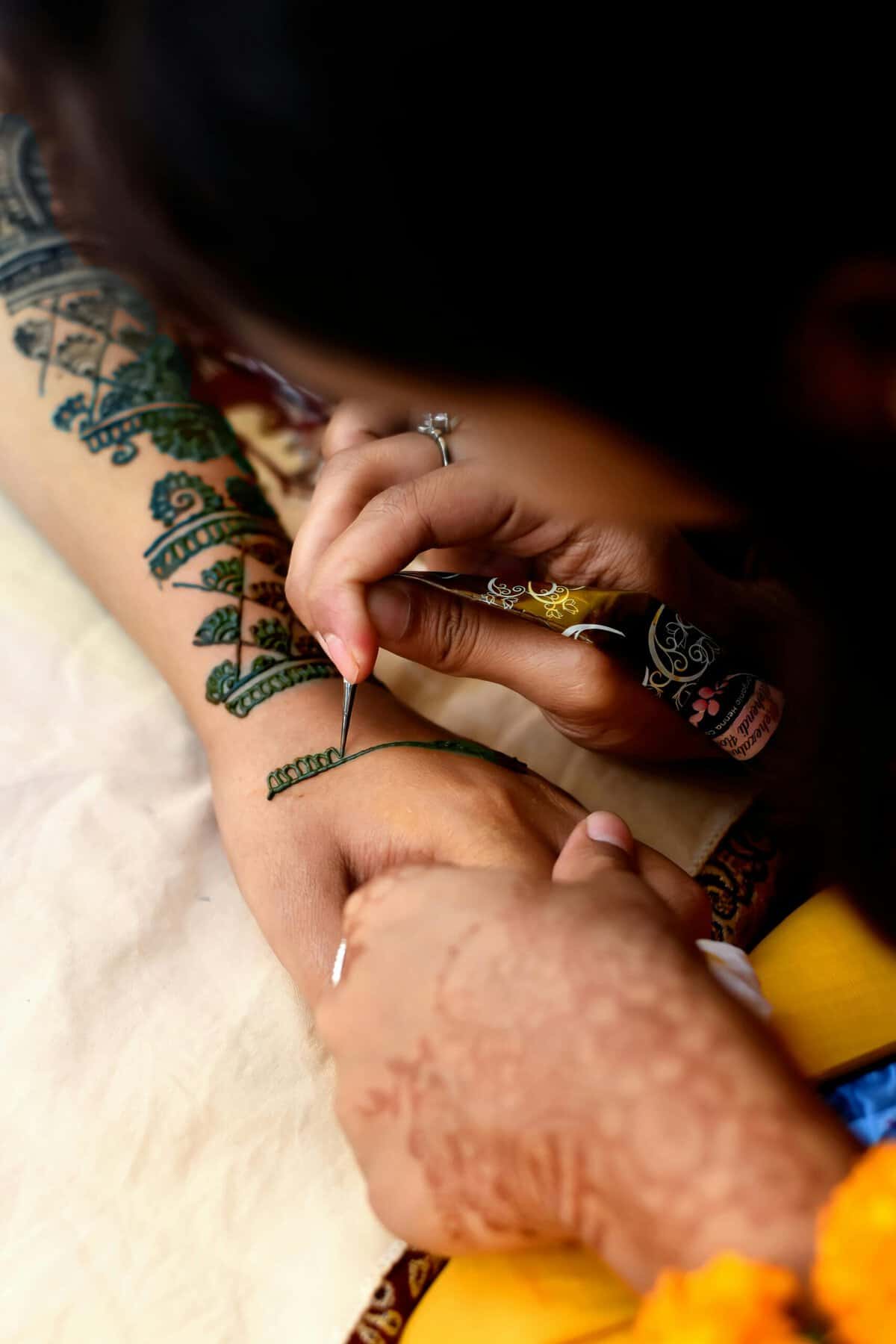
I wore mehendi on my wedding day.
That doesn’t feel like it should be a powerful statement, or even one that carries much emotional weight. Anyone looking at me would probably assume it was nothing out of the ordinary. If they were familiar with South Asian wedding traditions, they might even assume there had been a whole pre-wedding celebration - surrounded by family members, mothers, bridesmaids, and aunties - where intricate designs were applied to our skin while everyone celebrated together.
Except I didn’t have that.
I’m adopted from Nepal. My family are white, British, spread out across the world, and some of them are no longer here.
And that’s okay. If there’s anything I’ve learnt through my counselling journey, both as a client and as a therapist, it’s that everyone has a different story.
This is a small snapshot of mine, which I hope to share because I believe honest conversations about adoption are important.
For those unfamiliar, mehendi (or mehndi) is a traditional form of body art used across many South Asian, Middle Eastern, and North and East African cultures. The paste made from the henna plant is applied to the skin in intricate designs and is often used during weddings and celebrations.
In many South Asian weddings, mehendi is part of a larger cultural ritual - a joyful gathering where family and friends celebrate together before the wedding day.
For many brides, it’s simply part of the process. For me, it was an intentional decision that carried considerable emotional weight.
While my body carries a South Asian origin, culturally, I often feel far removed from it. I don’t speak the language. I didn’t grow up immersed in South Asian traditions. I wasn’t raised celebrating the cultural practices that might have connected me to that part of the world.
For much of my life, I have felt, culturally at least, more white-British than anything else, from the culture I was adopted into rather than the one I was born into.
There’s a particular kind of uncertainty that can come with transracial and intercountry adoption.
You can look like you belong to a culture while simultaneously feeling like an outsider to it. Your appearance suggests one story, while your lived experience tells another.
And the truth is, even if I don’t feel culturally South Asian in many ways, that part of my story still exists.
My story didn’t start at the point of my adoption. My body carries a history that began somewhere else; genealogy from another place, a different family, someone who carried and birthed me, ancestors both alive and returned to the ground.
I questioned whether I had the right to include something that I hadn’t grown up with. I wondered how it might be perceived by others, particularly by people who are culturally South Asian and for whom these traditions are deeply rooted in family, community, and history.
But I also wondered how it might be perceived by my white family, both adoptive and in-laws.
I worried there might be confusion or judgment in displaying a traditionally South Asian practice within a wedding that was otherwise largely Western.
But I desperately didn’t want to give it up either.
Throughout my life, my relationship to myself, my body, my ethnicity and my culture - or even South Asian culture more broadly - has evolved. I went from feeling and wanting to be completely disconnected, to slowly incorporating small but meaningful symbols: the flag, the kukri, the momos, and wanting to learn more about where I come from.
While there might be criticism that these are surface-level connections, I would argue that adoptees have to start somewhere. The way adoptees connect with culture - particularly if we were relinquished very young - will always be different from those born into it.
And again, different is okay.
Regardless, I was ready to incorporate this piece of tradition into my wedding day.
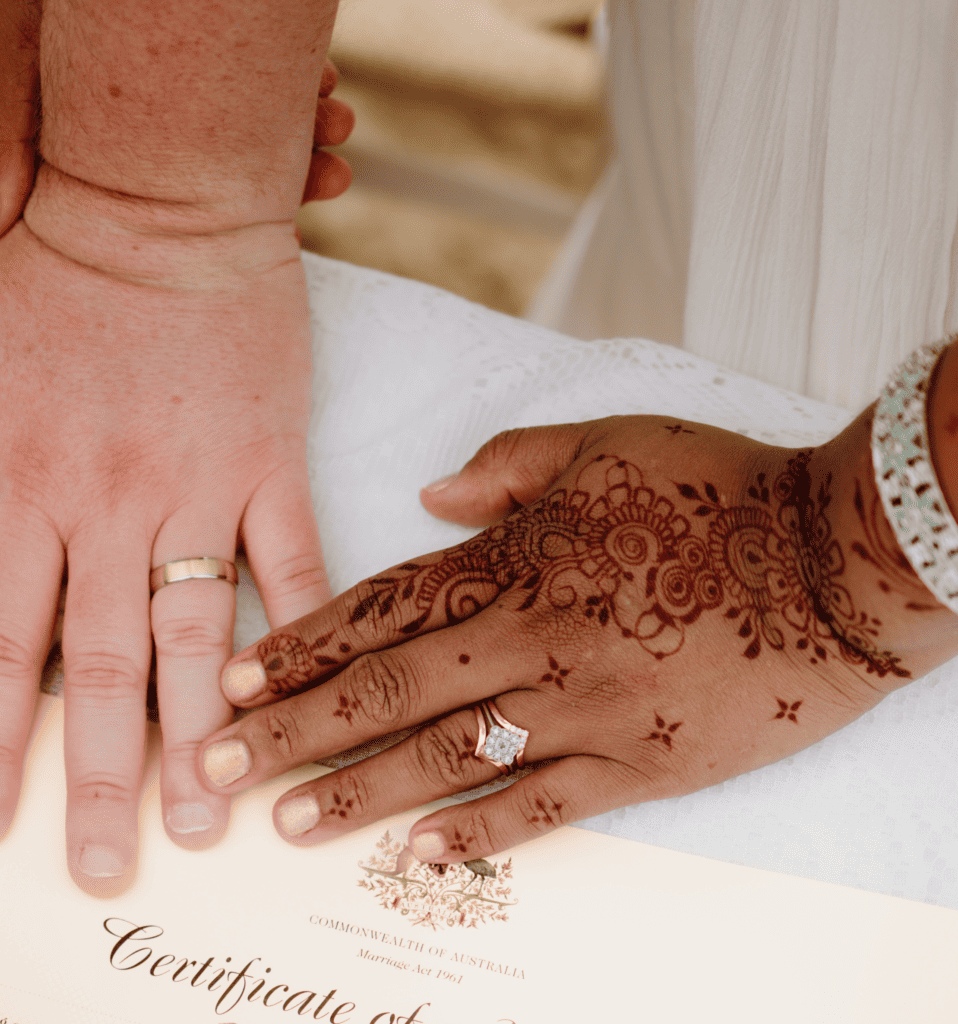
And I’m so glad I did.
In counselling, questions of identity often arise in similar ways.
People navigating adoption, migration, or cross-cultural lives frequently find themselves holding multiple identities that don’t always fit together easily. There can be grief for what was lost, questions about where one belongs, and pressure to explain a story that doesn’t have simple answers.
It can also become especially complex when approaching major life events like weddings.
What traditions will you include?
What parts of yourself will you honour?
What does your wedding say about who you are?
And if you are in an intercultural relationship, other questions are often part of the process:
Where will we have the wedding?
Which cultures do we honour?
Do we have two weddings?
While I’m not a wedding planner or a wedding expert, I do understand that weddings, birthdays, holidays, and other significant life events can have a powerful emotional impact. Therapy can provide a space where these questions don’t have to be resolved immediately. Issues can have the space to be explored.
Identity is rarely a fixed destination, and more often than not, it continues to evolve as we learn more about ourselves and grow.
For many people, healing begins not by finding perfect clarity, but by allowing space for complexity.
For some, that might look like reconnecting with culture.
For others, it might mean redefining what belonging looks like.
For me, it meant wearing mehendi on my wedding day.


