
A year or so ago, I completed a certificate in Emotional Freedom Techniques (EFT), often referred to as “ EFT tapping” or "Tapping". At the time, I was curious about how it might fit into my work as a counsellor. As a person-centred therapist, my approach is usually rooted in conversation, reflection, and creating a space where people can explore their experiences safely.
But over time in my counselling practice, I began to notice something interesting. In moments where a client became particularly overwhelmed, anxious, or stuck in a trauma response, I sometimes felt myself wondering: Would tapping help here?
It’s not something I use in every session - and it’s never something I impose - but when it feels appropriate, tapping can offer a gentle way to help the body settle.
Emotional Freedom Techniques (EFT) is a therapeutic method that involves lightly tapping on specific acupressure points on the body while focusing on a particular feeling, memory, or issue. It combines elements of cognitive therapy, experiential exploration, and somatic regulation.
The idea is simple: while the mind acknowledges something distressing, the tapping provides rhythmic sensory input that may help calm the nervous system. This can sometimes reduce the intensity of the emotional response and allow people to stay present with what they are feeling.
For some people, this makes it easier to talk about difficult experiences without becoming overwhelmed. Tools that support nervous system regulation can be particularly helpful during periods of high stress, trauma responses or burnout; when the body may already feel stretched beyond its limits.
Anxiety is not just something we think about; it’s something we feel in the body.
Many people describe anxiety as tightness in the chest, racing thoughts, nausea, dizziness, or a sense that their nervous system is constantly “on edge.” While talking about anxiety can be helpful, sometimes the body needs support to settle before deeper exploration becomes possible.
This is where tapping can be useful. The repetitive tapping, combined with naming what is happening internally, can sometimes help people regulate their stress response in the moment.
Clients often report that their distress level decreases while tapping, even if the issue itself hasn’t been fully resolved. That shift can create enough space to explore the thoughts, memories, or experiences connected to the anxiety.
It’s also something clients can practise outside of the therapy room, offering another tool they can return to when they’re feeling overwhelmed.
Trauma responses often live in the body as much as in the mind. When people encounter reminders of past experiences, their nervous system can react quickly, sometimes before they even have words for what they are feeling.
Approaches that include body-based regulation can therefore be helpful alongside traditional talk therapy, and tapping is one of many tools that can support this process.
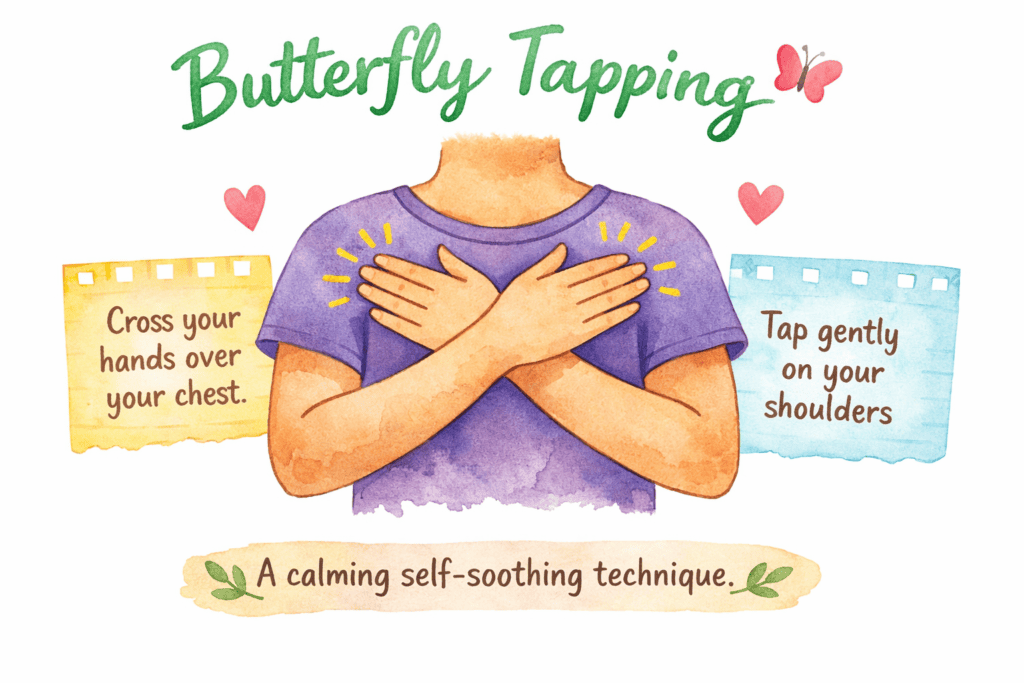
In particular, butterfly tapping is often used in trauma-informed work because it provides bilateral stimulation and a sense of self-soothing.
It’s important to say that EFT is not a cure for trauma, and it doesn’t replace the relational work that happens in therapy. But it can sometimes help people stay within a manageable emotional window while they process difficult experiences.
As a person-centred therapist, my priority is always the therapeutic relationship and the client’s autonomy. I don’t see therapy as applying techniques to people. Instead, it’s about working collaboratively and respecting each person’s pace, needs, and preferences.
If we use tapping in a session, it usually happens in a very collaborative way. We might explore together what someone is feeling in the moment, what words resonate with them, and what they would like to shift or move toward.
The tapping statements themselves (the sentences thought or spoken while tapping) are often created together. They aren’t scripted. Instead, they emerge from the client’s own experience and language, which tends to make them feel more authentic and meaningful.
Part of my role as a therapist is to help create a space where we can gently explore the presenting issue and understand what may be sitting underneath it. From there, we can work together to consider how the client would like to relate differently to the feeling or situation.
Another helpful aspect of tapping is that it can become something clients take with them outside the therapy room. Many people find it useful as a practical tool they can return to when anxiety and stress begin to rise. Sometimes clients and I practise tapping and self-soothing statements in advance, particularly when they know a stressful situation is coming up, such as an important meeting or upcoming travel.
At the same time, like any therapeutic tool, EFT is not a one-size-fits-all approach. For some people, it resonates strongly, while for others, it may not feel helpful at all. That’s completely okay. It’s simply one option among many ways we can support emotional well-being.
EFT has received growing attention in psychological research over the past two decades, with a number of studies exploring its potential benefits for stress, anxiety, and trauma-related symptoms.
A systematic review published in Frontiers in Psychology (2022) examined the evidence base for Clinical EFT across a range of psychological and physical conditions. The review found that randomised controlled trials have reported improvements in areas such as anxiety, depression, phobias, and post-traumatic stress disorder (PTSD), as well as physiological issues such as sports performance and cortisol levels. The authors also noted that improvements were often maintained over time, that benefits could emerge within a relatively small number of sessions, and that EFT interventions have been successfully delivered both in person and remotely.
Other research has explored EFT in high-stress professional contexts. For example, a randomised controlled trial examining nurses working in COVID-19 hospital wards found that a single guided online group EFT session significantly reduced reported levels of stress, anxiety, and burnout compared with a control group that received no intervention.
Research has also suggested potential benefits for trauma-related symptoms. A 2016 meta-analysis found that EFT interventions were associated with significant reductions in PTSD symptoms across multiple clinical studies. These improvements were observed both when EFT was used within therapy treatment and when individuals practised it as a self-help technique, with no adverse effects reported.
While more research is always needed, these findings suggest that approaches which combine cognitive reflection with body-based regulation techniques may offer meaningful support for some people experiencing anxiety, trauma, or high levels of stress.
EFT Tapping isn't my main approach to therapy, but there are moments where it can certainly be helpful. For example, when:
• anxiety becomes intense during a session
• someone feels overwhelmed or emotionally flooded
• trauma memories begin to activate the nervous system
• words feel difficult to access
• someone wants a practical strategy to manage stress and anxiety outside of therapy
Sometimes even a few minutes of tapping can help shift the intensity of what someone is experiencing.
Ultimately, therapy is about finding what supports you best. For some people, that might include EFT tapping. For others, it might be reflection, conversation, grounding exercises, or simply having a space where they feel genuinely heard.
Tapping is not a magic solution, and it doesn’t replace the deeper relational work of therapy. But it can be a helpful companion to that work, offering a way to regulate the nervous system while exploring the experiences that matter most.
If you’re curious about EFT or looking for support with anxiety, stress, or trauma responses, therapy can provide a safe place to explore what might help you feel more regulated and supported.
If you’d like to work together, you can reach out to book a session. I offer counselling online across Australia and internationally (excluding North America).


